And it wasn’t the only thing they uncovered.
BY TIM NEWCOMB
Archaeologists excavating the land of a former farm in Sweden struck gold—well, silver actually—when they found a buried pot filled with Viking-era silver.
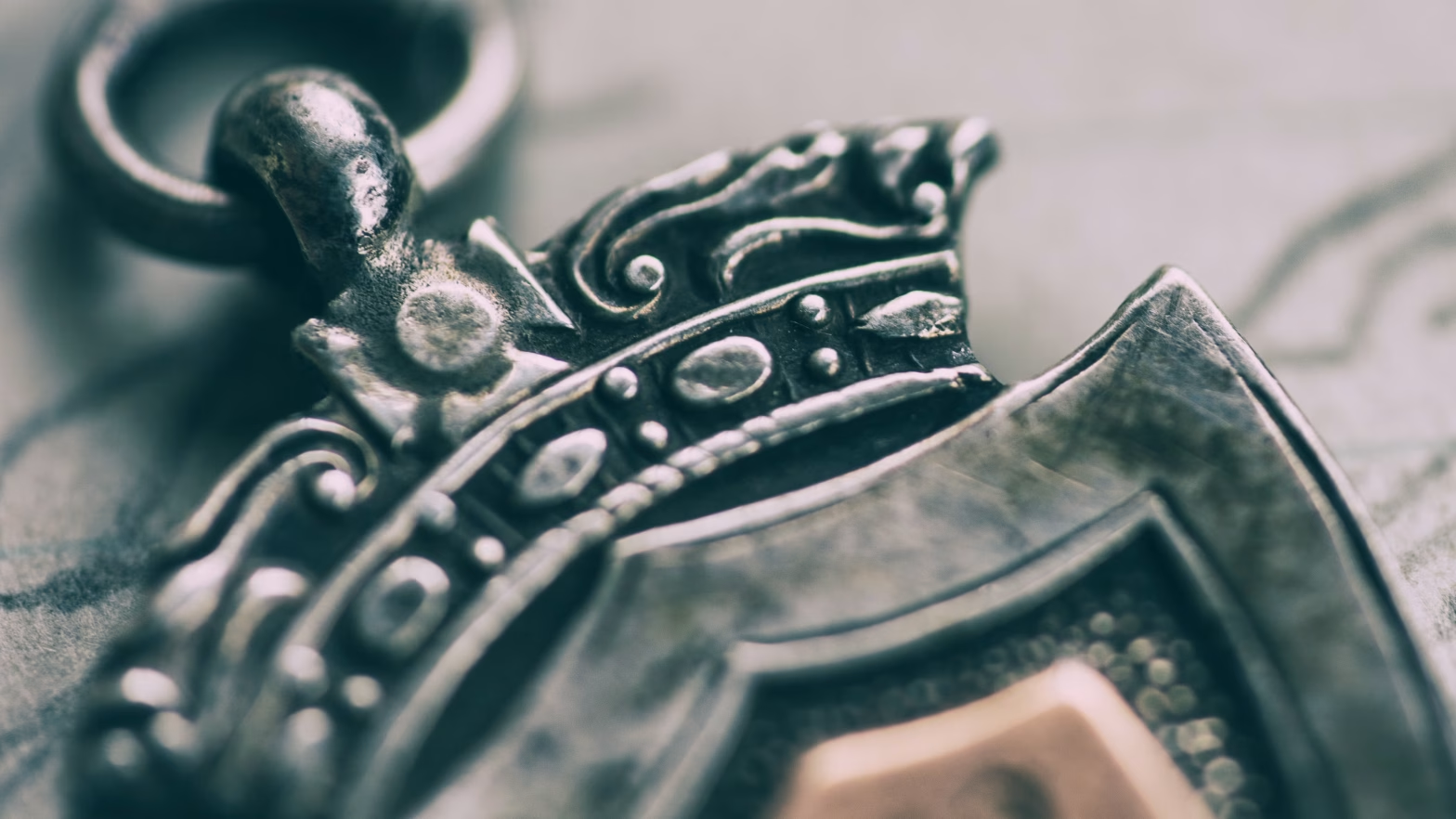
In 2025, archaeologists from Arkeologerna, a division of the Swedish History Museum, announced the discovery of not only the silver treasure, but also 34 buildings, a burial ground, and 1,450 total artifacts from the Late Iron Age, about 500 to 1050 A.D., in Täby. But it’s the “unique buried silver treasure containing exclusive silver arm and neck rings, a silver amulet, pearls, and coin pendants” that has created the most buzz.
“The find is exceptional not just due to the variety of the silver objects,” John Hamilton, project manager at the Swedish History Museum, said in a translated statement, “but also due to the direct connection to the remains of the farmstead burial site.”
Experts believe the buried treasure was part of a ritual experience and that the burial may have coincided with the closing of the farm.
Located under a hollow block near an older home, the silver was found in a pot, with the stash containing silver necklaces and bracelets, a bag made of linen and silk, pearls, and a coin pendant. Hamilton said the fact that the fabric on the bag was preserved was unique and likely due to silver ions interacting with the textile.
The bag included a 12-coin pendant made from European and Islamic coins dating from 904-997 A.D. The coins were minted in Persia, Bavaria, Bohemia, Normandy, and England. There was also pollen on the bag like grains and medicinal plants that were from the Viking age.
“The treasure may have been buried as the conclusion of a long and grand ceremony to honor a high-ranking deceased woman,” Hamilton said, adding the farm may have closed down at the same time.
“The linen bag also had silk details of a very exclusive kind that must have been imported from outside,” Hamilton said. “It was probably a special bag that may have been used for something else from the beginning, for example in a ritual context.”
The site’s 34 buildings include up to 15 associated with ritual acts thanks to nearby burials. The team examined the five graves, three with coffins and two with cremations. While DNA testing wasn’t highly conclusive, it did show there were relatives and non-relatives buried on the site.
The farm on a small hill close to a forest northeast of Stockholm featured about 1,300 farm-related artifacts and another 150 tied to the adjacent burial ground. The team discovered pottery made with domestic clay that resembled a style common on the other side of the Baltic Sea. Hamilton said this indicates the pieces were made by someone who came from outside the area and settled in Täby.
It’s unknown if the same person with the world-traveled pottery also owned the silver treasure with coins collected from across the continent. If they did, what a life they must have led.
This article was originally published in Popular Mechanics on April 24, 2026.


